

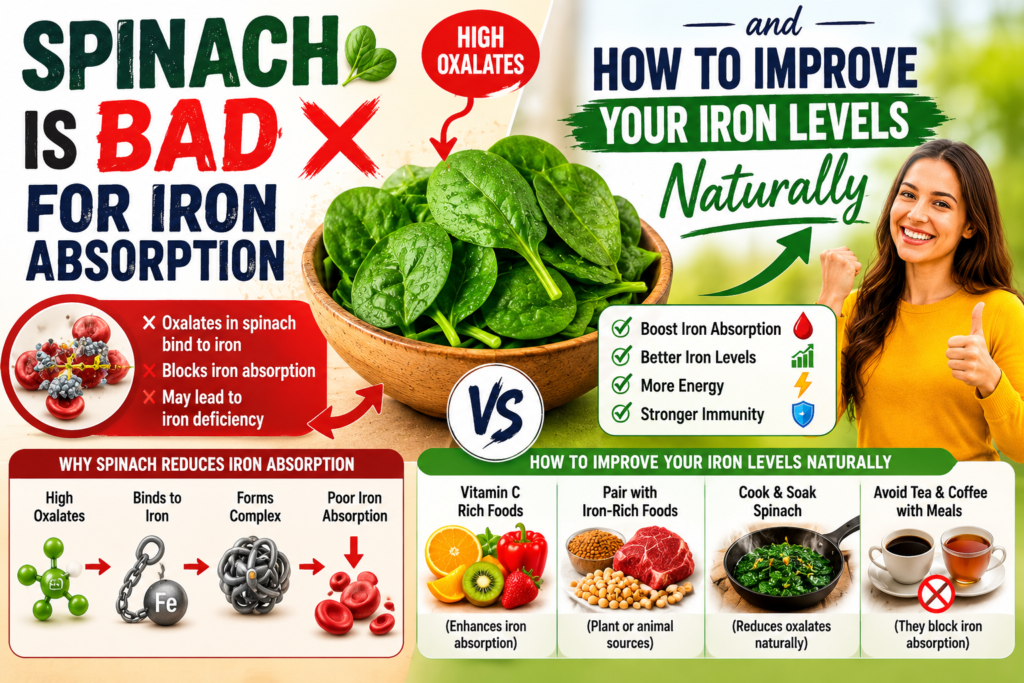
Spinach is widely recognized as one of the healthiest vegetables available. It is packed with vitamins, minerals, antioxidants, and fiber, making it a popular choice for health-conscious individuals. Many people also associate spinach with iron and believe it is one of the best foods for preventing or correcting iron deficiency. However, nutrition science has shown that the relationship between spinach and iron is more complicated than many realize. Understanding why spinach is bad for iron absorption can help you make smarter dietary choices and improve your iron levels naturally.
While spinach does contain iron, the body does not absorb it as efficiently as many people think. This is due to certain naturally occurring compounds in spinach that interfere with iron absorption. Fortunately, there are several ways to support healthy iron levels without giving up the nutritional benefits of spinach.
Why Iron Is Important
Iron is an essential mineral that plays a critical role in the body. It helps produce hemoglobin, a protein found in red blood cells that carries oxygen throughout the body. Iron also supports energy production, brain function, immune health, and overall well-being.
When iron levels become too low, individuals may experience symptoms such as:
- Fatigue
- Weakness
- Dizziness
- Pale skin
- Shortness of breath
- Difficulty concentrating
Because iron is so important, many people look for foods that can help maintain healthy iron levels. Spinach often tops the list, but its effectiveness as an iron source is frequently misunderstood.
The Difference Between Iron Content and Iron Absorption
One of the biggest misconceptions about nutrition is that a food’s nutrient content automatically determines how much of that nutrient the body receives. In reality, absorption matters just as much as content.
Iron comes in two forms:
- Heme iron
- Non-heme iron
Heme iron is found in animal products such as beef, poultry, and fish. The body absorbs this form of iron very efficiently.
Non-heme iron is found in plant foods like spinach, beans, lentils, nuts, and seeds. This form of iron is absorbed less efficiently and is more affected by compounds that either enhance or inhibit absorption.
Understanding this distinction is essential when discussing why spinach is bad for iron absorption.
The Oxalate Problem
The primary reason spinach has a poor reputation regarding iron absorption is its high concentration of oxalates.
Oxalates are naturally occurring compounds found in many plants. Spinach contains particularly high amounts of these substances. When oxalates enter the digestive system, they bind to minerals such as iron and calcium.
Once bound, these minerals become more difficult for the body to absorb. As a result, much of the iron contained in spinach may pass through the digestive tract without entering the bloodstream.
This explains why spinach is bad for iron absorption despite being considered an iron-rich vegetable. The issue is not the amount of iron present but the body’s ability to access and use it.
The Myth of Spinach as the Ultimate Iron Food
For generations, spinach has been promoted as a solution for low iron levels. Many people assume that eating more spinach will automatically increase their iron stores.
Although spinach does contribute some iron to the diet, relying on it as a primary iron source may not be effective, especially for individuals with existing iron deficiency.
The body benefits most from iron that can be absorbed and utilized efficiently. Because spinach contains high levels of oxalates, it does not provide iron as effectively as many other foods.
This is why nutrition professionals often recommend a variety of iron-rich foods rather than focusing solely on spinach.
Should You Stop Eating Spinach?
Learning why spinach is bad for iron absorption does not mean spinach should be removed from your diet. In fact, spinach remains one of the most nutritious vegetables available.
Spinach provides significant amounts of:
- Vitamin A
- Vitamin K
- Folate
- Magnesium
- Potassium
- Antioxidants
- Dietary fiber
These nutrients support eye health, bone strength, immune function, digestive health, and cardiovascular wellness. Spinach continues to offer substantial health benefits even if it is not the ideal source of absorbable iron.
Natural Ways to Improve Iron Levels
If your goal is to increase iron levels naturally, there are several effective dietary strategies you can follow.
Eat More Iron-Rich Foods
One of the simplest approaches is increasing your intake of foods that naturally contain iron.
Excellent plant-based iron sources include:
- Lentils
- Chickpeas
- Kidney beans
- Black beans
- Tofu
- Pumpkin seeds
- Quinoa
- Fortified cereals
Animal-based sources provide highly absorbable heme iron and include:
- Lean beef
- Chicken
- Turkey
- Fish
- Shellfish
A balanced diet that includes a variety of these foods can help support healthy iron levels over time.
Pair Iron With Vitamin C
Vitamin C significantly improves the absorption of non-heme iron.
When vitamin C is consumed alongside iron-rich foods, it converts iron into a form that is easier for the body to absorb.
Good sources of vitamin C include:
- Oranges
- Lemons
- Strawberries
- Kiwi
- Bell peppers
- Tomatoes
- Broccoli
For example, adding lemon juice to a spinach salad or including tomatoes in a bean-based meal can improve iron absorption.
Avoid Iron Blockers During Meals
Certain foods and beverages can reduce iron absorption when consumed at the same time as iron-rich meals.
Common examples include:
- Tea
- Coffee
- Excess calcium supplements
- Some high-fiber foods
If iron levels are a concern, it may help to consume these items between meals rather than with meals.
Consider Cooking Spinach
Cooking spinach can reduce some of its oxalate content. Boiling, steaming, or sautéing spinach may improve mineral availability compared to eating it raw.
Although cooking does not completely eliminate oxalates, it can make spinach slightly more favorable from a nutritional standpoint.
Combining cooked spinach with vitamin C-rich ingredients can further support iron absorption.
Who Should Pay Extra Attention?
Certain groups face a higher risk of iron deficiency and should pay closer attention to dietary iron absorption.
These groups include:
- Women with heavy menstrual cycles
- Pregnant women
- Growing adolescents
- Vegetarians
- Vegans
- Endurance athletes
For these individuals, understanding why spinach is bad for iron absorption can help prevent nutritional gaps and encourage more effective dietary planning.
The Bottom Line
Spinach is one of the most nutrient-dense vegetables in the world, but its reputation as an exceptional iron source is somewhat misleading. Although spinach contains iron, its high oxalate content significantly reduces the body’s ability to absorb that iron efficiently.
Understanding why spinach is bad for iron absorption allows people to make more informed choices about their diets. Rather than relying solely on spinach for iron, it is better to consume a variety of iron-rich foods, pair them with vitamin C sources, and be mindful of factors that affect absorption.
Spinach still deserves a place in a healthy eating plan because of its many vitamins, minerals, and antioxidants. By combining spinach with smart nutritional strategies, you can enjoy its benefits while naturally supporting healthy iron levels and overall wellness.